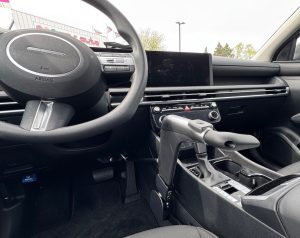
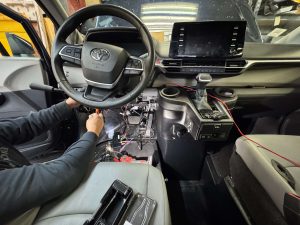
If you’re shopping for your first wheelchair van, or adjusting to a new chair, you’ve probably heard a salesperson rattle off a handful of terms: tie-downs, Q-straps, docking systems. It’s easy to nod along without knowing what actually separates them.
This guide walks through the three common setups in plain language, so you understand what each one does before you decide anything.
Put simply, a securement system holds your chair to the floor of the van and pairs with a seat belt for the rider, keeping both steady from the grocery run to the highway. When you’re ready to talk install, our Securement Systems Installation page is the place to start.
What Wheelchair Van Securement Systems Actually Do
Every securement system does two jobs, and people often blur them together. The first is the chair restraint: tie-downs or a dock that anchors the wheelchair itself to the vehicle floor. The second is the occupant belt: the lap and shoulder belt that secures the person riding in the chair.
Both parts matter, and a proper setup uses them together on every trip. You don’t need to memorize standards to get this right. You just need to know that the chair and the rider are each secured, and that the shop installing your system can show you how both work.
Wheelchair Tie-Downs: The Straps You See Most Often
Tie-downs are four straps that anchor the chair to floor points in the van. You’ll also hear the term Q-straps, which is common shorthand for Q’Straint’s strap systems, the brand we work with. Tie-downs can be manual, where someone clicks in and tightens each strap, or automatic, where the system retracts and tensions the straps for you.
Tie-downs suit people who use different chairs or travel with passengers whose chairs change, since straps flex across chair types. The trade-off is that someone else usually needs to help secure the chair, and it takes a minute or two each time.
Wheelchair Docking Systems: Independent, Hands-Free Securement
A docking system is a locking device on the floor and a bracket on the chair. You roll in, and the chair locks itself into place. That’s the whole process.
Docking systems suit people who drive from their chair or want to secure it on their own. Picture getting into the van alone after a doctor visit, without waiting for help.
The trade-offs are real, though. Your chair needs a compatible bracket, and the system is typically a larger upfront cost than straps. If cost is a concern, ask about financing. Many families spread the investment over time rather than paying it all at once.
Comparing the Types of Wheelchair Securement Systems
Here’s a quick scan of how the three setups stack up:
- Speed: Docking is fastest, since the chair locks on its own. Automatic tie-downs are quicker than manual straps.
- Independence: Docking wins for solo drivers. Tie-downs usually require assistance.
- Flexibility across chairs: Tie-downs work with a wider range of chairs. Docking depends on a compatible bracket.
- Cost: Tie-downs are typically lower; docking systems are typically higher.
The right answer depends on your chair, who’s driving or riding, and the van itself, which is why a quick conversation beats guessing.
Questions to Ask Before You Commit
Bring these to any shop you visit:
- Does this system work with my specific chair?
- Who will secure the chair on each trip, me or someone else?
- What does the warranty cover?
- What does it cost, including financing options?
It also helps to know what to ask an installer. Our post on 5 questions to ask before choosing an adaptive vehicle installer walks through that conversation.
Ready to See Your Options?
AMS Auto is a family-owned shop that works with trusted manufacturers, including Q’Straint and EZ Lock. We can look at your chair and your van together and walk you through what fits. See our securement systems or contact us to start the conversation.