For a lot of drivers, the conversation starts the same way. A doctor mentions a safety concern. A family member brings it up at dinner, gently but pointedly. And underneath it all is a quiet worry: is this the end of driving?
One-arm or one-hand weakness, whether it’s from a stroke, diabetic neuropathy, an injury, or another condition, does change the mechanics of steering. But it doesn’t have to change the outcome. Drivers manage this every day with the right equipment, properly fitted to their bodies and their vehicles.
This post walks through the main categories of steering aids, who each one is typically suited for, and how an adaptive driving specialist narrows down the right option. Think of it as a plain-language starting point, not a medical guide.
Why one-arm or one-hand weakness changes how you steer, not whether you can
Standard steering assumes two hands working together: one gripping and rotating while the other feeds the wheel through the turn, adjusting for road conditions as you go. When one arm or hand isn’t fully available, that coordination breaks down, even if strength on the other side is fine.
This shows up after a stroke that leaves one side weaker (hemiplegia or hemiparesis), with diabetic peripheral neuropathy that reduces feeling in the hands, with limb differences, and with progressive conditions like MS or Parkinson’s. The specifics vary, but the underlying challenge is usually some combination of grip, rotation range, and fatigue, not raw strength alone.
The good news is that adaptive steering equipment exists precisely because this is such a common situation. There isn’t one universal fix, but there is very likely a solution that matches your particular limitations. The main categories break down like this.

Spinner knobs: the most common steering aid and how they work
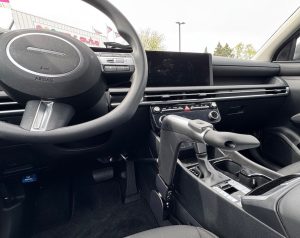
A spinner knob, sometimes called a steering knob or driving knob, attaches to the steering wheel and lets a driver turn it with one hand, without needing to re-grip mid-turn. The knob rotates independently of the wheel itself, so a full turn can be completed smoothly with a single hand instead of the hand-over-hand motion two-handed steering requires.
Spinner knobs come in a few grip styles, and the right one depends on the driver’s hand function:
- Palm grip (cup grip): cradles the hand, well suited to drivers with limited finger strength
- V-grip (fork grip): fits between the index and middle finger, works well for moderate grip strength
- Amputee ring: designed for drivers with a limb difference at the wrist
Spinner knobs tend to be the first recommendation for drivers who have one fully functional hand with reasonable grip strength, for example, someone whose stroke affected their non-dominant side. They’re legal for use on public roads and are generally the most affordable adaptive steering modification available.
Installation is usually straightforward. Most spinner knobs mount to the wheel without permanent modification, but a professional fitting still matters. Positioning affects reach and shoulder range, and a knob mounted in the wrong spot can create fatigue instead of solving it.
Tri-pin and quad attachments: for drivers with limited grip or hand controls
Tri-pins and quad-pins work on a different principle than spinner knobs. Instead of the driver gripping a knob, the hand rests against a set of pins that brace the fingers or palm, supporting the hand rather than requiring it to hold on.
This makes tri-pins a better fit for drivers whose grip is significantly reduced or inconsistent: neuropathy that causes numbness in the fingers, partial hand function after a stroke, or progressive conditions where grip strength changes over time. In short, they’re built for drivers who can’t reliably maintain a hold on a spinner knob through a full range of motion.
In practice, this means the hand is guided through the turn by the pins rather than gripping and releasing, which lowers the risk of losing contact with the wheel mid-maneuver. Quad-pin attachments follow the same idea with a fourth contact point for added stability.
Because these are fitted to the shape and movement of an individual hand, a professional evaluation before purchase is especially important here. This isn’t an off-the-shelf, one-size-fits-all product. And for drivers where even a tri-pin doesn’t fully solve the equation, often because arm strength or shoulder range is the limiting factor rather than grip, the next category comes into play.
Reduced-effort and zero-effort steering systems: when standard modifications aren’t enough
Reduced-effort and zero-effort steering systems take a different approach entirely. Rather than changing how the driver’s hand contacts the wheel, these modifications adjust the vehicle’s power steering itself, cutting the physical force needed to turn, in some configurations down to nearly nothing.
This matters for drivers where the limiting factor isn’t grip but overall arm strength or endurance: significant weakness on the functional side, fatigue-related conditions, or situations where even standard power steering requires more sustained effort than is safe over a full drive.
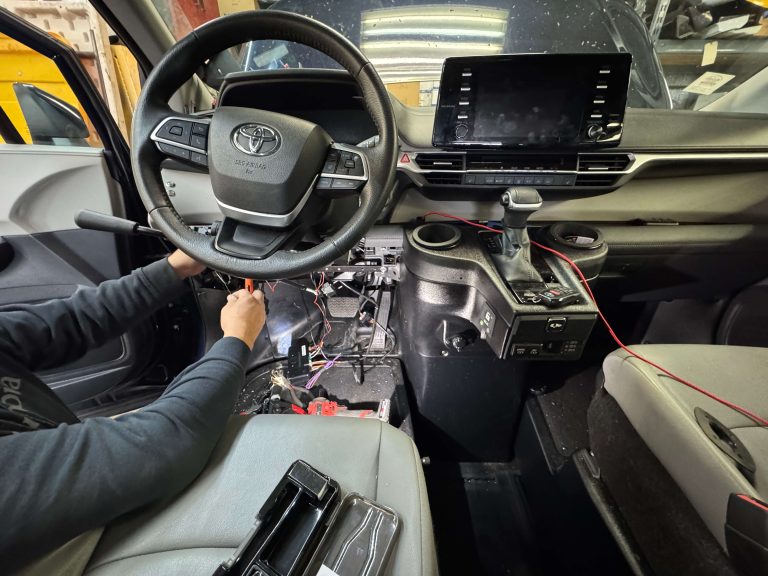
These are more involved installations. Because they interact directly with the vehicle’s existing power steering system, they require professional setup and calibration rather than a simple attachment. It’s also common for reduced-effort systems to be paired with a spinner knob or tri-pin: the steering aid manages grip and contact, while the reduced-effort system manages resistance. The point here isn’t to shop for a specific product, just to know this tier of solution exists if grip aids alone aren’t enough.
How your condition guides which steering aid is right for you
There’s no strict formula, but certain conditions tend to point toward certain starting points. This table is meant as a general reference, not a prescription. An in-person evaluation is what actually determines the right fit.
| Condition | Typical starting point |
|---|---|
| Stroke with one-side weakness, good grip on functional hand | Spinner knob (palm or V-grip) |
| Stroke with partial hand function | Tri-pin or quad attachment |
| Diabetic neuropathy, reduced finger sensation | Tri-pin, or possibly a palm-grip spinner |
| Limb difference at the wrist | Amputee ring or custom attachment |
A driver rehabilitation evaluation, or an assessment with an installer, is what turns this general guidance into a specific recommendation. Some drivers end up combining solutions: a reduced-effort system paired with a tri-pin is a common example. The goal at every step is the same, the safest, most natural-feeling setup for that specific driver, not the most equipment.
Can these be installed on any vehicle? What Illinois drivers need to know
One of the first questions drivers ask is whether their particular car, truck, or SUV will even work. For spinner knobs and tri-pins, the answer is almost always yes: these are compatible with virtually any vehicle that has a standard steering wheel. Reduced-effort systems are a bit more vehicle-specific, since they interact with the power steering setup.
One nuance worth knowing: vehicles equipped with certain driver-assistance features, like lane-keep assist or automatic emergency braking, may need additional calibration after a steering modification. A qualified installer will check for this as part of the process.
On the warranty question, installers who are NMEDA members follow guidelines designed to protect the vehicle manufacturer’s warranty rather than void it. And in Illinois, there are no additional state licensing requirements specific to adaptive steering aids, though it’s a good idea to keep documentation of your equipment in the vehicle.
Getting fitted for a steering aid near Chicago
The process is more straightforward than most people expect. Here’s roughly how it goes:
- Initial consultation: talking through your condition, which side is affected, your vehicle, and your driving goals.
- Assessment: evaluating grip strength, range of motion, shoulder mobility, and fatigue on your functional side.
- Equipment recommendation: narrowing down to one or two options based on that assessment.
- Fitting and test: trying the equipment in a controlled setting before anything is finalized.
- Full installation and adjustment: calibrating the fit to your reach, shoulder height, and driving posture.
For spinner knobs and tri-pins, this is typically all handled in a single appointment. Reduced-effort systems may take a bit longer given the added complexity. We serve drivers throughout Chicagoland, McHenry County, Rockford, Peoria, and northern Illinois from our location in Woodstock, IL.
Getting back behind the wheel
Driving with one-arm weakness is a problem that’s been solved, over and over, for drivers across Illinois and around the country. The right equipment, properly fitted, is often the difference between staying independent and depending on someone else for every errand and appointment. If you’re weighing whether driving is still possible for you, the only way to know for sure is to talk it through with someone who does this every day.
Ready to find the right steering aid for your vehicle and condition?
Our adaptive driving specialists in Woodstock, IL work with drivers from across Chicagoland, Rockford, Peoria, and northern Illinois. We’ll assess your needs, explain your options, and fit everything to your vehicle, so you leave driving confidently.