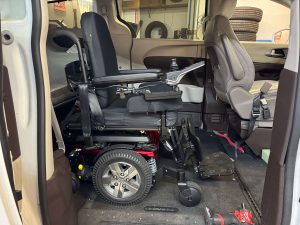
Getting in and out of the car is often the hardest part of the trip, not the driving. If lowering into the seat, twisting your body, or lifting your legs in has become a daily struggle, you don’t necessarily need a full wheelchair-accessible van. You might just need a handicap vehicle transfer seat.
Here’s what that means, how it works, and how to know if it’s right for you.
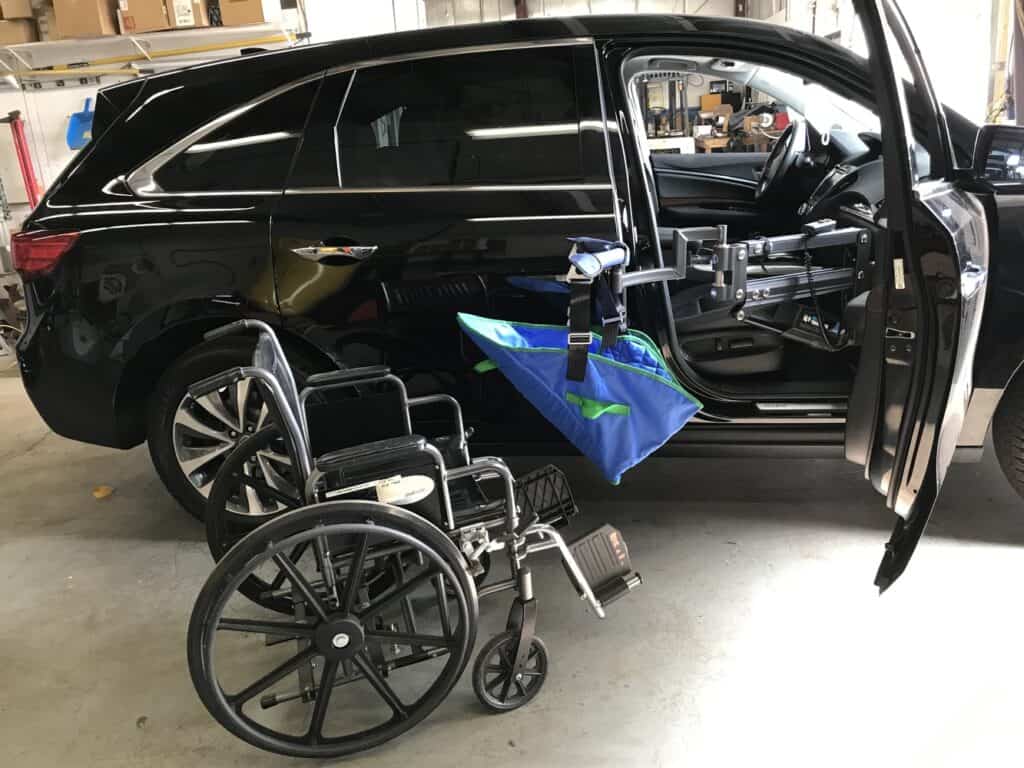
What is a handicap vehicle transfer seat?
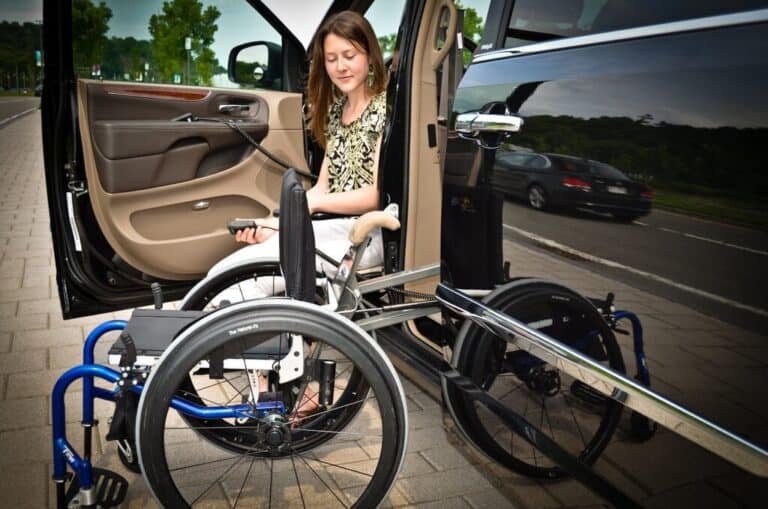
A transfer seat is installed in your vehicle to help you move safely from a wheelchair, walker, or standing position into the driver or passenger seat. It’s built for people who can walk or bear some weight but need support with the transfer itself.
This is different from a full wheelchair-accessible van, which lets you ride while still seated in your wheelchair. A transfer seat assumes you’ll move into the regular vehicle seat, and it makes that move easier and safer.
Neither option is “better.” They solve different problems.
Who can use a transfer seat?
Think about the people in your life managing this every day: a parent recovering from hip surgery who can still walk short distances but struggles with car height, an aging father who gets around fine at home but dreads the car door, a spouse who’s been physically supporting a partner in and out of the seat for months.
None of these situations require giving up driving or riding along on errands, school runs, or Sunday dinners. A transfer seat is about keeping that routine intact, whether you’re behind the wheel or riding in the passenger seat.
Most transfer seats support up to 600 pounds, so they work for the vast majority of people. If you’re taller or have longer legs, let us know when we evaluate your vehicle. Some cabins have less room to swivel, and it’s better to catch that up front than after installation.
The main types of transfer seats
- Turning (swivel) automotive seats. The seat rotates and extends partially outside the vehicle, giving you a stable platform to transfer onto before it powers back into driving position.
- Power transfer seat bases. These lift, lower, and rotate to reduce the height and distance of the transfer, with simple motorized controls.
- Transfer boards and grab handles. Lower-cost, manual options that add stability and leverage without powered parts.
Within powered seats, you’ll also see 4-way and 6-way options. A 6-way seat adds up-and-down motion, so it can lower to meet your wheelchair when you’re getting in and raise back up once you’re seated. It costs more, but for a lot of people that extra motion is what makes the transfer easy instead of awkward.
Where are transfer seats used?
Transfer seats can be used in full-size wheelchair vans or wheelchair-accessible minivans, as well as cars, minivans, trucks and SUVs. The seating positions can be used for the driver or front passenger. Different companies offer seats for different vehicles, the most common transfer seating is designed for full-size wheelchair vans or wheelchair accessible vans. While transfer seats are available for cars, minivans, trucks and SUVs, they can be harder to find.
How does a transfer seat work?
Using a turning seat as an example: it powers outward and down toward you, positioned at a height that’s easier to transfer onto from a wheelchair or walker. Once you’re seated, it powers back in and rotates forward into driving position. In many installs, we can keep your vehicle’s original seat cushion on the new base, so you don’t lose comfort features like lumbar support and the seat still matches your interior. Controls are simple, and safety features like weight limits and locking mechanisms keep the seat stable throughout.
What is the installation process?
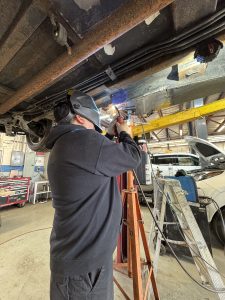
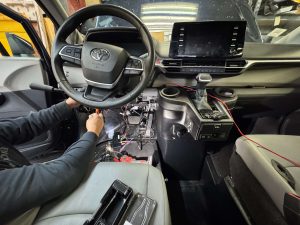
The transfer seat installation process is usually fast. In most cases, transfer bases do not require an alteration of the factory seat and are made with heavy gauge frames, actuators, and controls that make them easy to use. Every company and manufacturer is different, so it is always best to check with them.
Types of seats: 6-way seat vs. 4-way seat
The 6-way seat and 4-way seat are basically the same but a 6-way seat has the ability to go up and down. The 6-way seat is generally more expensive but often considered the better choice because of the up and down monition. This motion allows an individual to position the seat lower than their wheelchair when transferring into the seat and higher than their wheelchair when they are transferring out of their seat.
Benefits to using a vehicle transfer seat
- Avoid daily struggle associated with getting in and out of a vehicle
- More comfortable
- Safe and easy transfers
- Work with cars, minivans, trucks and SUVs
- Provides an individual with more freedom
Transfer seat or full wheelchair van conversion?
If you can transfer out of your wheelchair and sit in a standard seat, a transfer seat is likely enough. If you need to ride while remaining in your wheelchair, or transferring is no longer safe or comfortable, a full conversion may be the better fit. Not sure which applies to you? We’ll look at your situation and help you find what actually solves the problem.
Where to go from here
Getting in and out of your van shouldn’t be the hardest part of your day. Our installations are built to disappear into your routine, so you can focus on where you’re going, not how you’ll get there.
Ready to see what fits your vehicle and your life? Contact AMS Auto to schedule a consultation.